
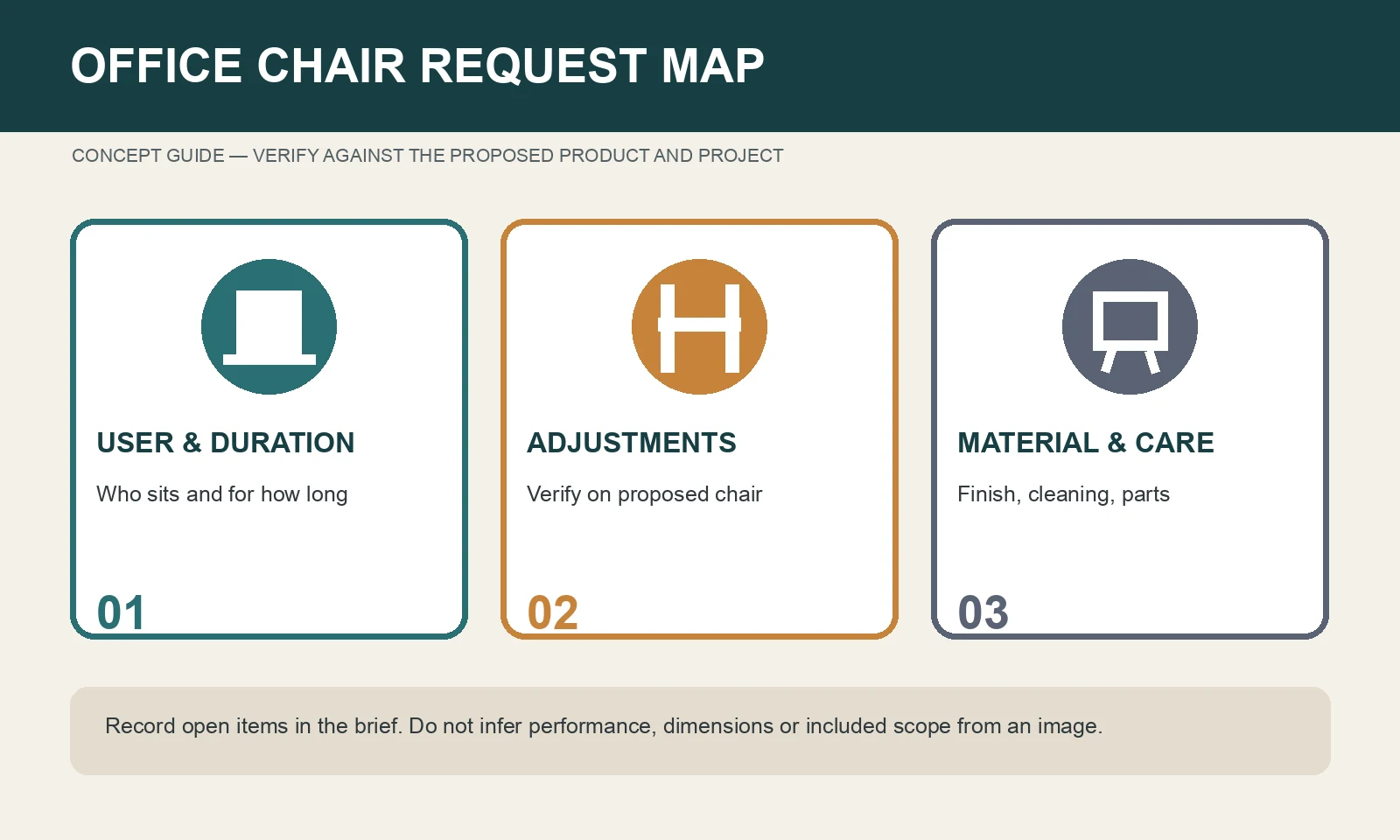
Commercial office chairs should be compared against users, tasks and time seated, then verified on the actual proposed chair. Labels such as task, executive, mesh or high-back are useful starting points but do not prove adjustment range, dimensions, testing or suitability. Historical model names are candidates for product matching, not confirmed current stock.
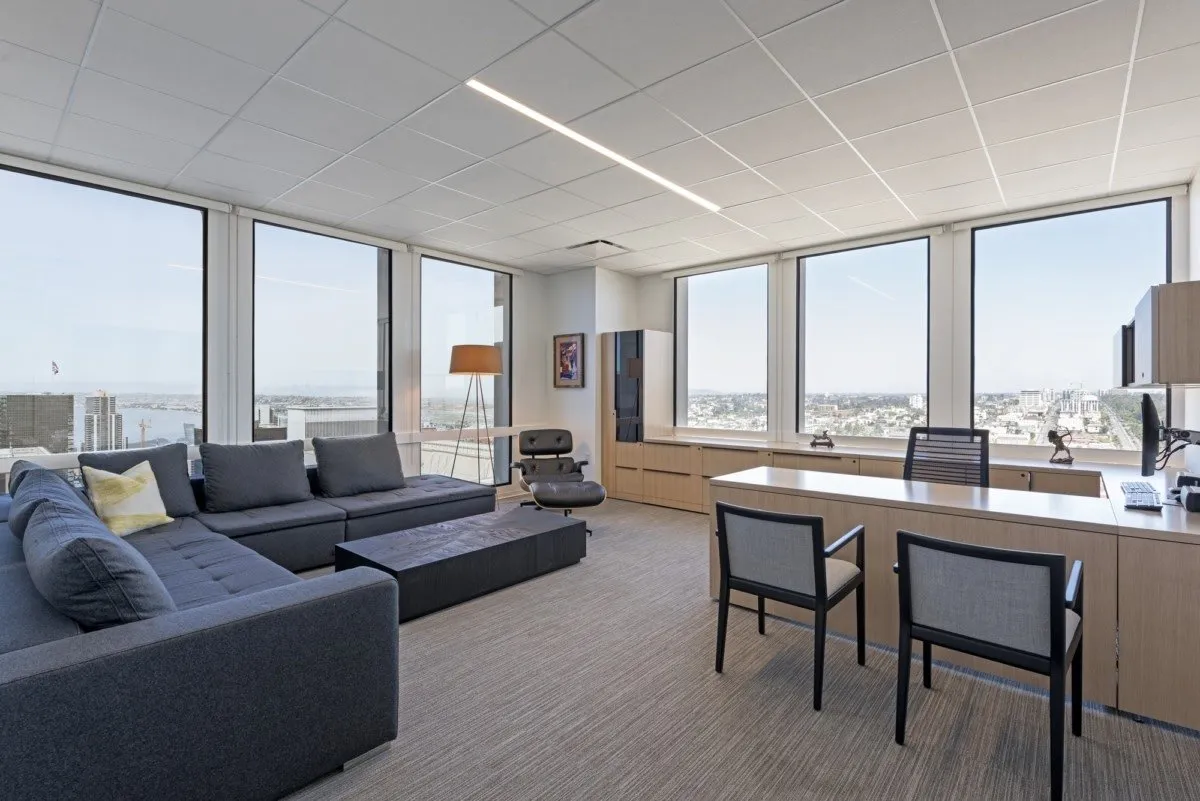
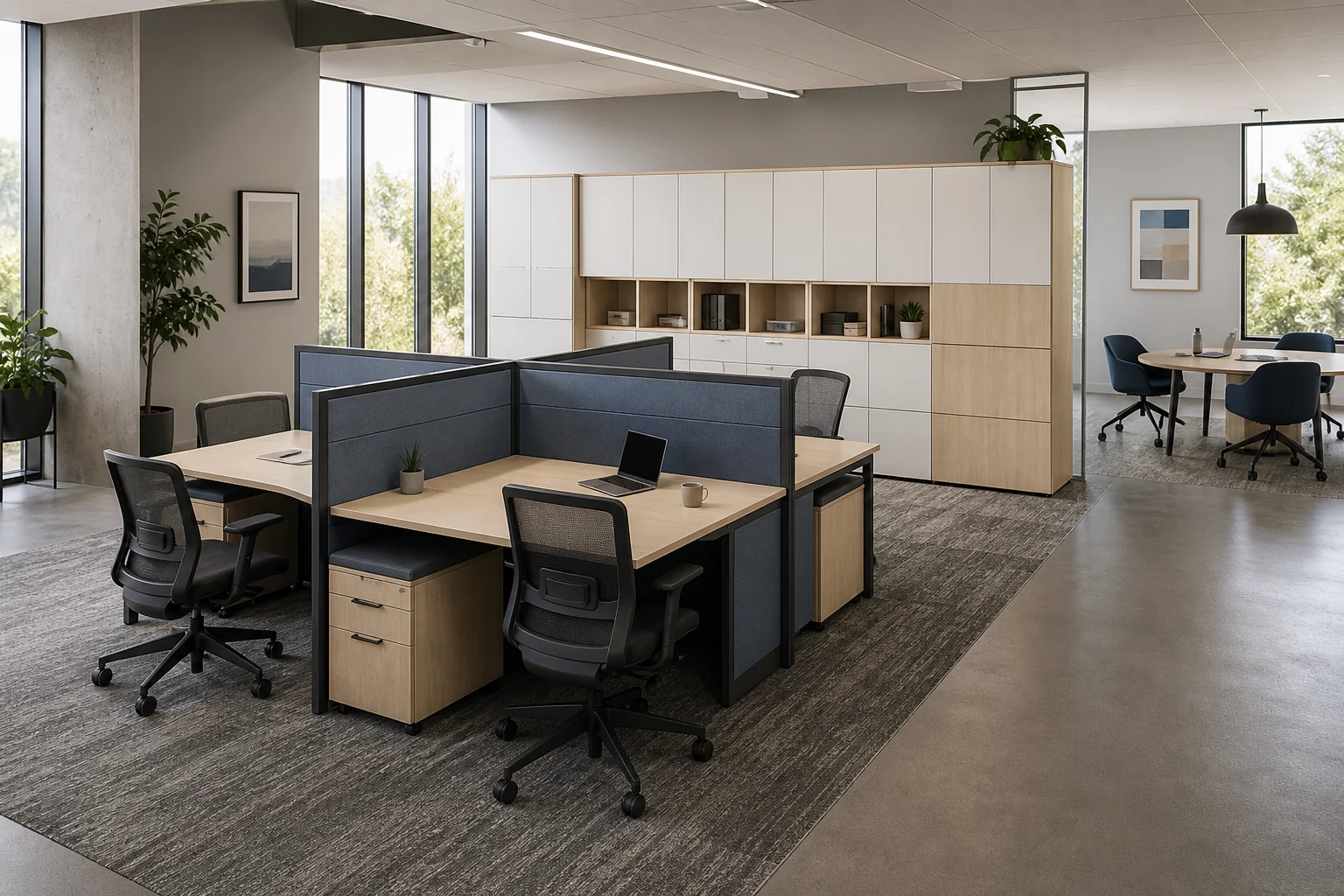
Separate the seating roles
- Daily task chair: compare the user range, work duration, desk relationship and adjustments actually offered.
- Executive chair: compare dimensions, movement, upholstery and room fit as well as appearance.
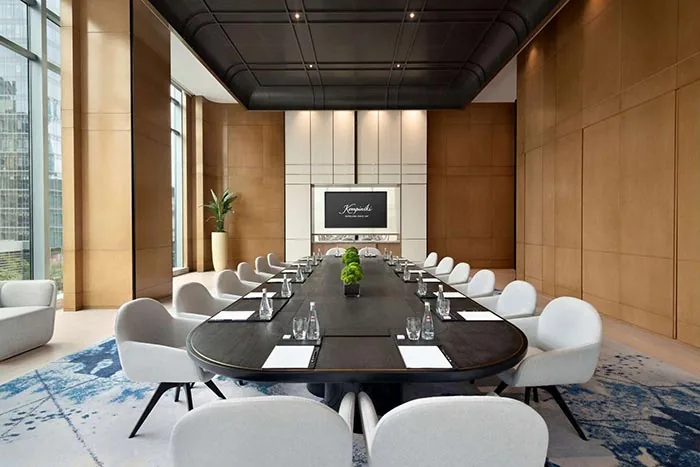
- Visitor or meeting chair: consider visit duration, movement, storage and cleaning; it may need different features from a daily-user chair.
Request features in verifiable terms
Ask the proposal to identify overall dimensions, seat and back construction, base and castors or glides, upholstery, and each adjustment provided. If armrests, seat depth, back support, tilt or headrest matter, list them as requirements and verify how they operate on the selected chair. Avoid health or posture outcomes that are not supported by appropriate evidence.
Include maintenance, replacement and project logistics
State the cleaning routine and substances used, then confirm care instructions for the proposed material. Ask which parts are replaceable, how products are identified after delivery and what the project quotation includes for assembly. For large quantities, clarify sampling or mock-up approval, packing, delivery phases, destination access and management of spare or replacement units. Product-specific warranties and tests must be confirmed in the contract and supporting documents.
Prepare the chair inquiry
Send quantities by seating role, user and task patterns, time seated, required adjustments, desk or table heights, flooring, material and colour references, cleaning conditions, destination and programme. Mark alternatives so proposals can show the cost and scope difference. For room-level decisions, link chair selection to open workspaces, private offices or meeting and training rooms.